Which Bone Should You Lengthen?
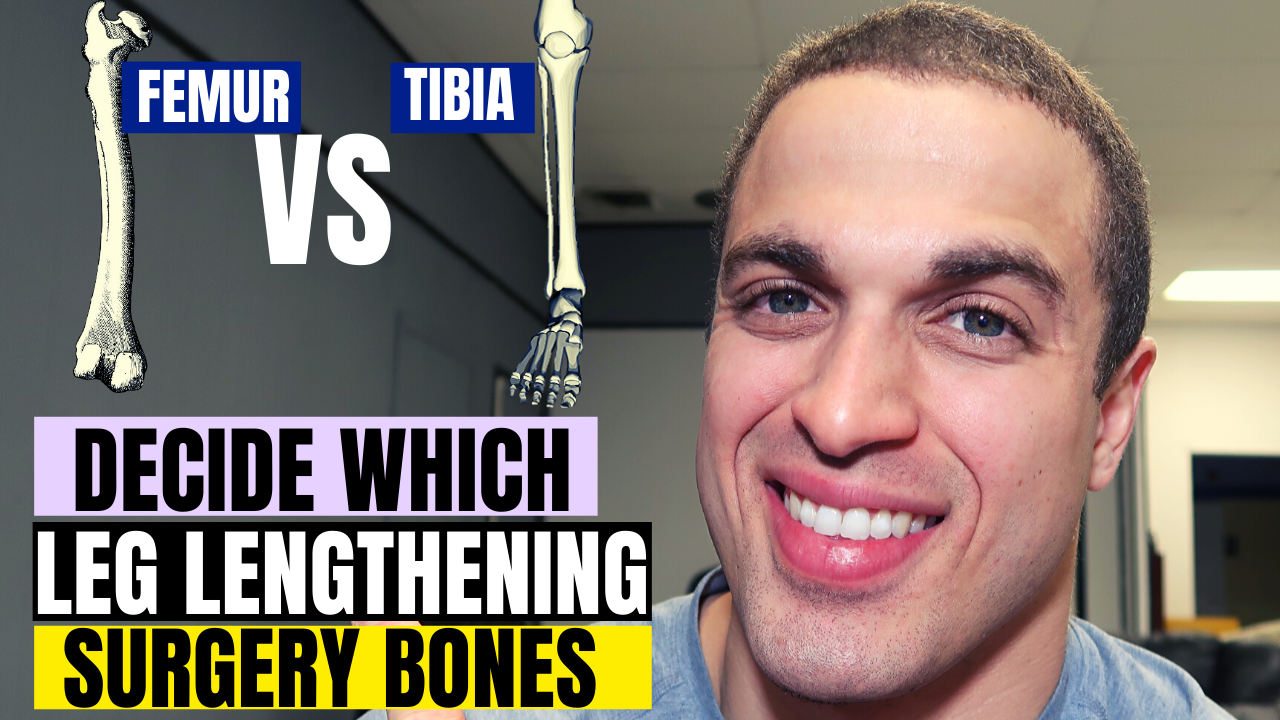
A common question I get asked is “which leg bones should I lengthen… the femurs or the tibias?!” This is a great question and the answer depends on a few different factors you should consider including…
- Safety:
Never risk your health for height or any other factor that I’ll talk about after this.
Now, the typical max length that surgeons will usually allow for lengthening of the femurs is up to 8cm or just over 3inches. This is the typical max but several people aren’t even candidates for this amount, and should actually get slightly less because of poor flexibility and other issues that could result in muscle & joint contractures etc.
The typical length for the tibiae are usually up to 5cm or just below 2 inches but again staying under 5cm for those with tight calves and Achilles tendon is the safer route especially if you’re an athlete to avoid potentially rupturing your tendon when returning to sprinting etc.
- Proportions:
So the average proportion ratio of the tibia to femur length is 0.8 give or take 0.02. To get this ratio you take the length of your tibias and divide by femur length (in the same units of course). So let’s say you’re a guy and your femur length is 40cm and tibia is 32cm then you have the ratio of 0.8. Even though in the real world few people are actually this symmetrical.
Usually you’ll want to lengthen the femur as you can gain more height safely as I mentioned before, some people naturally have shorter tibias genetically and it would be more preferable to them to lengthen the tibias. This goes the other way too, if your tibia to femur ratio is well over the 0.82 such as a 0.85 ratio then femoral lengthening might be ideal for you appearance-wise.
- Scarring:
I’m going to discuss internal nail scarring since it’s a more common method now. For femur nail lengthening the surgeons will make small ¼ inch incisions on the side of your thigh which will barely be visible once healed not to mention people typically cover their upper thigh leg. Whereas the tibia scars are majority in the front and side and are more visible when wearing shorts. So if you’re someone who might be self conscious about the faded scars when you’re out and about then the femur is a good idea.
- Efficiency:
The time frame turnaround for a femur is usually faster because there is more blood flow supply thus it heals faster than tibia. Also in the lower leg you need to consider the fact that you’re actually breaking both the tibia and fibula bones for proper lengthening so there’s more risk involved not to mention 2 chances of non-union or premature consolidation.
- Price:
Obviously the cost of the procedure will be a major concern and if you don’t already know it, getting the tibias lengthened is usually more expensive! Isn’t that crazy! Go figure!
So which bones should you have done for cosmetic leg lengthening? Well I’m sure you kinda see the way I’m leaning here, I would recommend the femurs over the tibias in terms of safety, more height gain, less noticeable scarring, faster recovery time and usually cheaper price!
But what if you want to get both done? What then. Here’s where I think. You should first discuss your x-ray measurements with your doctor and decide how much length to get on each set of bones without risking safety or skewing your proportions too much and even then I still suggest femurs first to get the majority of your desired height, which may actually quench your craving for taller height to avoid 2 surgeries, but if not, you can get more height on femur under 8cm limit and slightly less than 5cm on tibias and you should be good to go!
For my LL surgery I remember my doctor wanting to do my femur but my left tibia was shorter because of my childhood break there. I was in a crossroads. And being in bodybuilding where symmetry is key, I chose the tibia. In the end it wouldn’t have mattered in fact femur may have been better for a faster return to my sport but hey I was young and dumb. LOL.
So choose a set of bones…but choose wisely!